

Furniture Trends in India for 2026
India’s furniture market in 2026 is shaped by quiet luxury, responsible materials and modular living for urban homes. Local manufacturing strength and omnichannel retail drive a more mature, design-led consumer landscape.
Furniture Trends in India for 2026
Quiet Luxury, Local Manufacturing, Omnichannel Growth and Responsible Materiality
New Delhi / Bengaluru, 2026 — India’s furniture sector enters 2026 with a unique combination of maturity, industrial acceleration and a clear shift in consumer expectations. As domestic demand grows at one of the fastest rates worldwide, Indian consumers are adopting a more aspirational and discerning mindset: a turn towards quiet luxury, certified materials, modular solutions for urban living, and a fully hybrid purchasing experience integrating physical and digital touchpoints.
This transformation is far from incidental. It arises from a convergence of economic, demographic and cultural dynamics that are reshaping the market at scale. India—historically characterised by a strong tradition of handcrafted furniture—is experiencing rapid professionalisation: organised retail formats, large e-commerce platforms, modernised industrial clusters, and consumers who expect durability, design coherence and traceability.
This report explores the vectors that will define the direction of the Indian furniture industry in 2026 and examines how these shifts affect manufacturers, distributors, architects, interior designers and design-led companies.
1. A market in expansion: the rise of the middle class and a qualitative leap in consumer expectations
India’s furniture market continues to grow at a pace well above the global average. Rapid urbanisation, the rise of dual-income households and a robust demographic base—young and increasingly affluent—are generating strong demand for functional, aesthetic and accessible furniture. Added to this is a key phenomenon: the expansion of organised retail and the proliferation of platforms that have democratised access to brands, price points and design styles.
This dynamism accompanies a clear shift in consumer behaviour. The Indian buyer no longer selects furniture solely for cost or availability; instead, they look for identity, style and long-term value. Status-led purchases are giving way to decisions grounded in durability, timeless aesthetics and alignment with one’s lifestyle. In 2026, the market reaches a new level of maturity: brands unable to adapt to the heightened expectations will struggle to remain competitive.
International influence is stronger than ever. Social media, global design content and exposure to European, Japanese and Scandinavian styles are reshaping Indian taste towards warm minimalism, authentic materials and balanced environments. This evolution ties directly into the dominant aesthetic trend of the year: quiet luxury.
2. Quiet Luxury: the aspirational aesthetic defining 2026
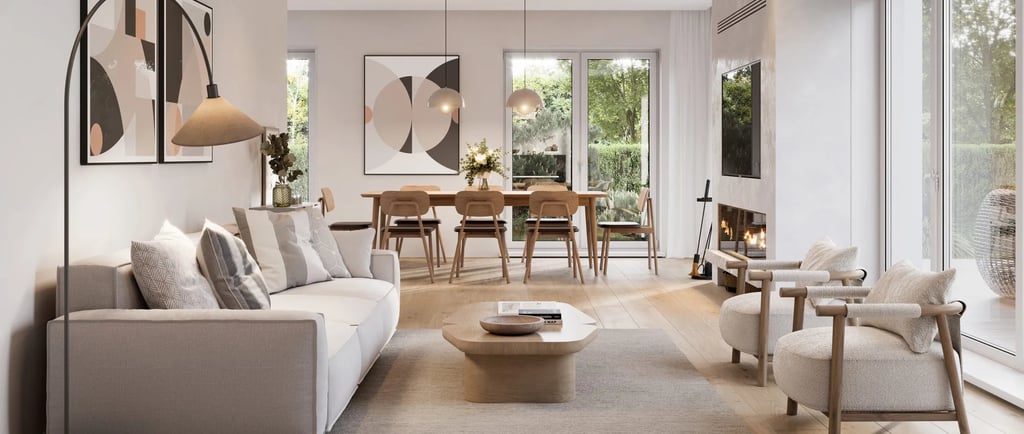
Quiet luxury represents a significant cultural shift in India. It is an understated form of luxury, grounded in tangible quality, noble materials and impeccable finishes. Consumers are no longer seeking exuberant pieces; they want products that convey serenity, craftsmanship, naturality and longevity.
This trend is especially visible in:
• Woods with visible grain: warm walnut, light oak, soft ash and matte teak.
• Neutral palettes: sands, taupes, mineral tones, beiges and natural browns.
• Honest design: balanced proportions, visible joints, crafted details.
• Natural textiles: premium cottons, textured linens, organic blends.
• Absence of ornamentation: form and materiality replace decorative excess.
The 2026 Indian consumer values what they describe as “luxury that can be seen and felt”, prompting manufacturers and designers to elevate technical quality, finishing discipline and the narrative behind each collection. This movement also favours local production strategies that combine artisanal know-how with advanced mechanisation—delivering industrial precision with a handcrafted soul.
3. Sustainability moves from discourse to purchase criterion
Although sustainability evolves unevenly across Asia, India is entering a stage of real adoption: certifications, controlled sourcing of timber, efficient processes and demand for transparency in manufacturing.
In 2026, Indian consumers—particularly upper-middle segments and corporate buyers—will actively enquire about:
• FSC certification or equivalent
• Verified timber origin
• Measurable durability (estimated lifespan)
• Low-emission laminates, decorative papers and engineered surfaces
• Recyclable packaging and optimised logistics
• Facilities with environmental audits
Sustainability becomes a competitive advantage because it aligns with three strategic priorities: brand reputation, purchase preference and future regulatory alignment. Companies that incorporate this dimension into their product communication will gain visibility in trade fairs, online marketplaces and negotiations with organised retail.
4. Local manufacturing: India’s emerging strategic advantage
India’s industrial policy, strengthened by initiatives such as “Make in India”, continues to attract investment across machinery, automation and technical training. This is consolidating a competitive manufacturing ecosystem in regions including Karnataka, Tamil Nadu, Telangana, Maharashtra and Haryana.
In 2026, local manufacturing enters a new phase:
1. Digitalised production: high-precision CNC, automated cutting and finishing lines, manufacturing software for process optimisation.
2. More dynamic catalogues: shorter cycles, rapid prototyping and collections tailored to micro-trends.
3. Craft meets industry: pieces with artisanal value produced with industrial consistency.
4. Export-ready capabilities: global-standard assembly, packaging, quality control and certification.
This professionalisation is reshaping external perception: India is no longer simply a consumption market—it is emerging as a viable alternative or complement to China for furniture manufacturing.
5. Omnichannel becomes the dominant model
The 2026 Indian buyer is fully accustomed to researching online, comparing products, visiting showrooms and completing the purchase through the most convenient channel. Omnichannel retail, already established in fashion and electronics, is now the expected norm in furniture.
The most effective strategies include:
• Experiential showrooms designed around curated interior settings rather than isolated products.
• E-commerce platforms with comprehensive technical sheets, 3D models, AR tools and visual comparison features.
• Click & Collect targeting urban customers who prioritise speed.
• Optimised delivery systems and simplified returns.
• Social commerce via Instagram, YouTube and regional platforms.
For the consumer, this hybrid pathway is not a perk—it is a baseline requirement. Brands that fail to integrate both channels will struggle to attract and retain demand.
6. Urban interiors: modular and multifunctional solutions dominate
Urban density and the rise in compact apartments have generated heightened demand for modular and multifunctional furniture. While India has been part of this trend for years, 2026 marks its consolidation as mainstream behaviour.
Most requested products include:
• Modular sofas adaptable to various configurations.
• Dual-function furniture: extendable tables, storage beds, bench-desks.
• Vertical solutions: wall-mounted shelving and minimalist storage.
• Fully modular kitchen and living systems.
• Online configurators enabling custom sizing, finishes and compositions.
This trend drives a significant opportunity for designers and surface suppliers: modularity relies on coherent palettes, contemporary textures and durable materials.
7. Materiality 2026: woods, stones and textiles of the new generation
India embraces a global aesthetic with a distinctly local sensibility. The textures shaping the year include:
Woods:
– Warm walnut, light oak, soft ash, matte teak.
– Ultra-matt finishes, deep grain, synchronised pore.
– Cacao, honey, sand and tobacco tones.
Stones / Minerals:
– Smooth, uniform quartz.
– Fine-grain granites and beige or smoke-grey limestones.
– Soft-touch stone surfaces.
Textiles:
– Rustic premium linens.
– High-density cotton in natural hues.
– Technical blends with an organic appearance.
Demand for hyper-realistic textures—particularly for digital printing, decorative papers, laminates, HPL and LVT—is set to grow as brands seek differentiation in modular systems and organised retail. India is a fertile market for suppliers capable of producing collections aligned with local tastes and warm tonalities.
8. Key trade fairs and events in India for 2026
Indian trade fairs are consolidating their role as strategic platforms for buyers, designers and manufacturers. The most relevant events for 2026 include:
• INDIAWOOD Bengaluru
The country’s most influential furniture manufacturing, machinery and materials event.
• DELHIWOOD / MUMBAIWOOD
Specialised fairs for carpentry, component solutions and interior-facing products.
• ACETECH and interior design exhibitions
Critical arenas for launching collections and detecting consumer signals.
Brands combining trade fair presence with digital product launches and design-led content will reinforce visibility and stakeholder trust.
9. Economic outlook: opportunities and challenges for 2026
India’s economic backdrop supports furniture sector expansion:
– Strong GDP growth.
– Rising consumer credit access.
– Acceleration in urban housing demand.
– Increased investment in residential and corporate interiors.
However, the market presents challenges:
• High competition on price and differentiation.
• Need for advanced technical training in production facilities.
• Logistics complexity in high-density urban centres.
• Price sensitivity across middle segments.
• Compliance with international export standards.
Success will depend on a brand’s ability to integrate design quality, technical reliability, locally adapted materials and omnichannel execution.
10. A decisive year for India
India enters 2026 as one of the world’s most strategic furniture markets. With a more demanding consumer, a rapidly professionalising industrial base and a fully consolidated digital ecosystem, the opportunities are compelling for companies able to interpret the signals.
Quiet luxury, sustainability, modularity and omnichannel retail are not trends—they are the structural pillars of the Indian market for the years ahead. Companies wishing to compete effectively must prioritise responsible design, materials aligned with local sensibilities, modular product structures, certification frameworks, experiential showrooms and robust digital content.
For players in design, consultancy, decorative surfaces and materials for furniture, India represents a fast-expanding landscape. 2026 will be a pivotal year to consolidate positioning, strengthen brand equity and forge long-term partnerships.