

China and the New Paradigm in Surface Design
Chinese manufacturers have mastered production. Now comes the real challenge: translating design into market language.
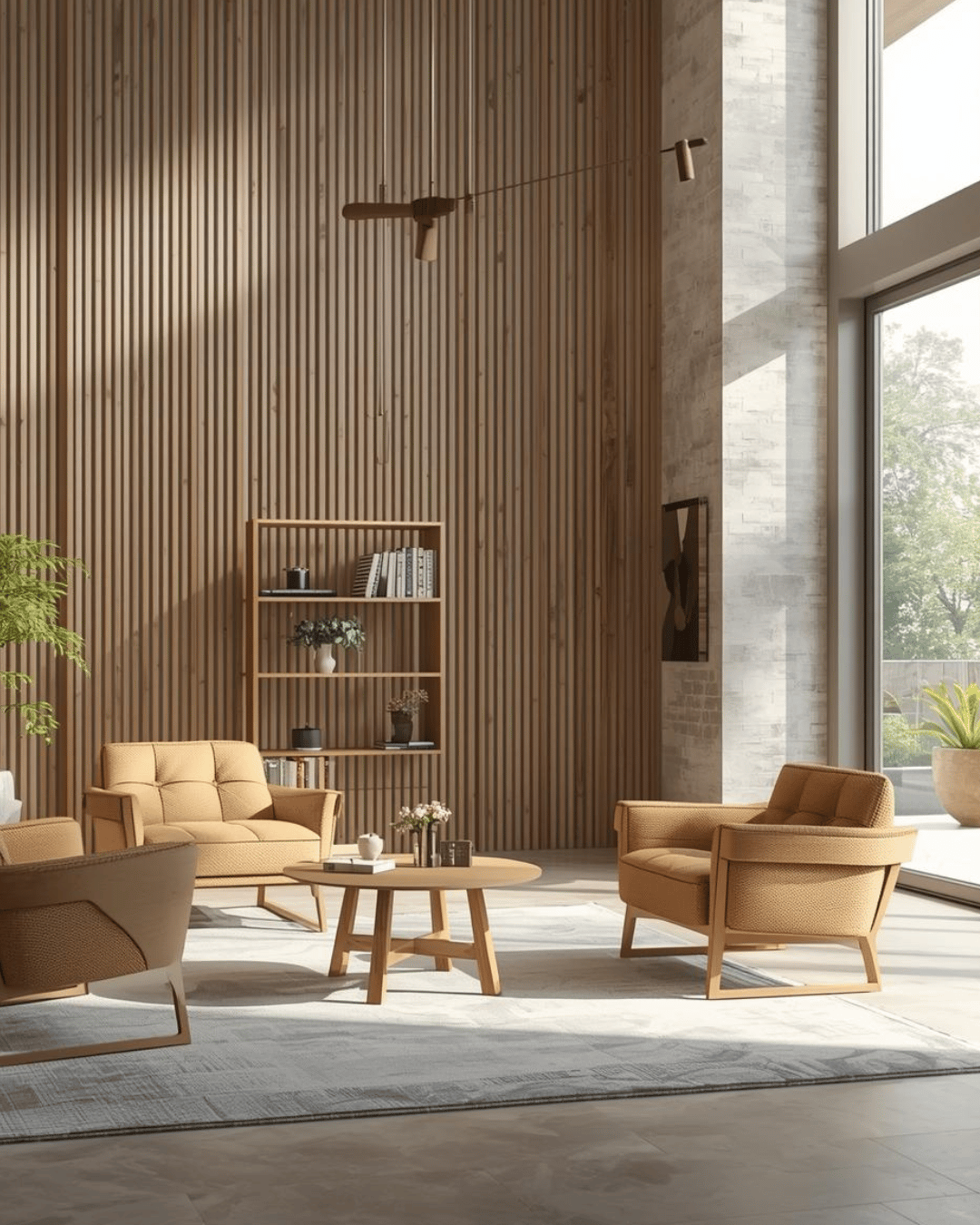

China and the New Paradigm in Surface Design
From Mass Production to Strategic Market Oriented Differentiation
The Chinese market for surface design and furniture components is undergoing a structural transformation. For years, competitiveness has been based on production capacity, speed, and price. Today, that model has reached its limit. The next step is clear: differentiation through design, curation, and adaptation to international markets.
China no longer competes solely on volume. It competes on perceived value.
From "Manufacturing-Driven" to "Market-Driven"
Chinese manufacturers have achieved an outstanding technical level. However, the main challenge today is not quality or industrial capacity, but the correct interpretation of the end market: what sells, how it's presented, and under what narrative.
The collections that succeed today are not the most technically complex, but those aligned with specific cultural, aesthetic, and commercial expectations of each market. This requires something beyond design: it demands strategic interpretation.
Design Yes, but with Cultural Translation
One of the major bottlenecks in the internationalisation of Chinese catalogues is aesthetic and commercial translation. A design can be excellent at a visual level, but fail in:
Proportions
Chromatic rhythm
Product storytelling
Price positioning
This is where the role of an external partner becomes key. Not to redesign from scratch, but to curate, adapt, and structure collections with market logic.
Deknex Design as Strategic Partner
In this context, Deknex Design (www.deknex.com) acts as a bridge between production capacity and international markets. Not as a traditional agent, but as a strategic partner that combines:
Trend intelligence applied to surfaces
Development and curation of market-oriented collections
Aesthetic, narrative, and commercial adaptation of catalogues
Product positioning for furniture brands and distribution
The value lies not in adding more designs, but in selecting the right ones and making them commercially viable.
The New Value: Well-Directed Catalogue
Increasingly, Chinese manufacturers are understanding that a reduced, well-structured, and strategically adapted catalogue sells more than an extensive offer without focus. The international market demands clarity, coherence, and value proposition.
Deknex works precisely on that point: transforming broad catalogues into effective commercial tools, aligned with real expectations of professional buyers.
Conclusion
China already dominates production. The next level is to dominate positioning. The future belongs to manufacturers who understand that design is not just aesthetics, but market language.
On that journey, having a partner who understands both design and international commercial dynamics is no longer a competitive advantage: it's a strategic necessity.